What is an Off-Grid Solar System?
An off-grid solar system is a self-sustaining energy solution that operates independently from the public electricity grid. It uses solar panels to capture sunlight and convert it into electricity for immediate use or storage.
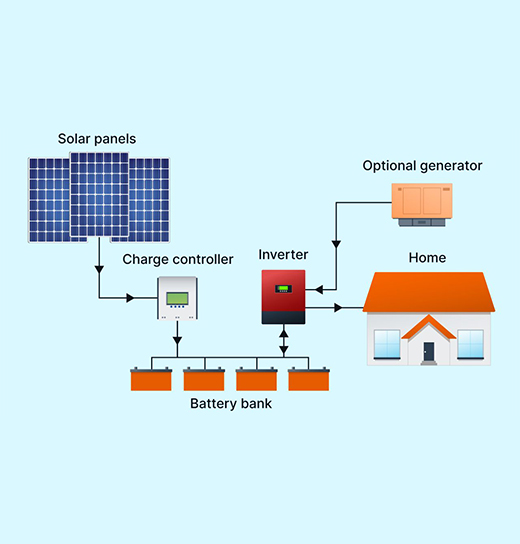
The stored energy is kept in batteries, which provide power during the night or on cloudy days. A charge controller ensures the batteries are not overcharged or damaged. An inverter converts the direct current (DC) from the panels or batteries into the alternating current (AC) used by most household appliances.
Key components
- Solar panels capture sunlight and generate DC power.
- Charge controller protects batteries from overcharging.
- Battery bank stores energy for nights and cloudy days.
- Inverter converts DC to AC for everyday appliances.
Benefits
Energy Independence
Complete freedom from grid outages.
Remote Ready
Ideal for farms, cabins and rural sites.
No Electricity Bills
Generate and store all the power you use.
Green Energy
Less dependence on fossil fuels.
Off-grid systems are especially useful in remote or rural areas where access to the power grid is unavailable or unreliable. They offer complete energy independence, which makes them ideal for homes, farms or cabins away from cities.
Although initial setup costs are higher because of batteries and backup equipment, they eliminate electricity bills. They also reduce dependency on fossil fuels and help promote green energy. Overall, off-grid solar is a practical and eco-friendly choice for sustainable living.